-
Beautiful Firetail Finch - I Stagonopleura bella I
Beautiful Firetail Bruny Island
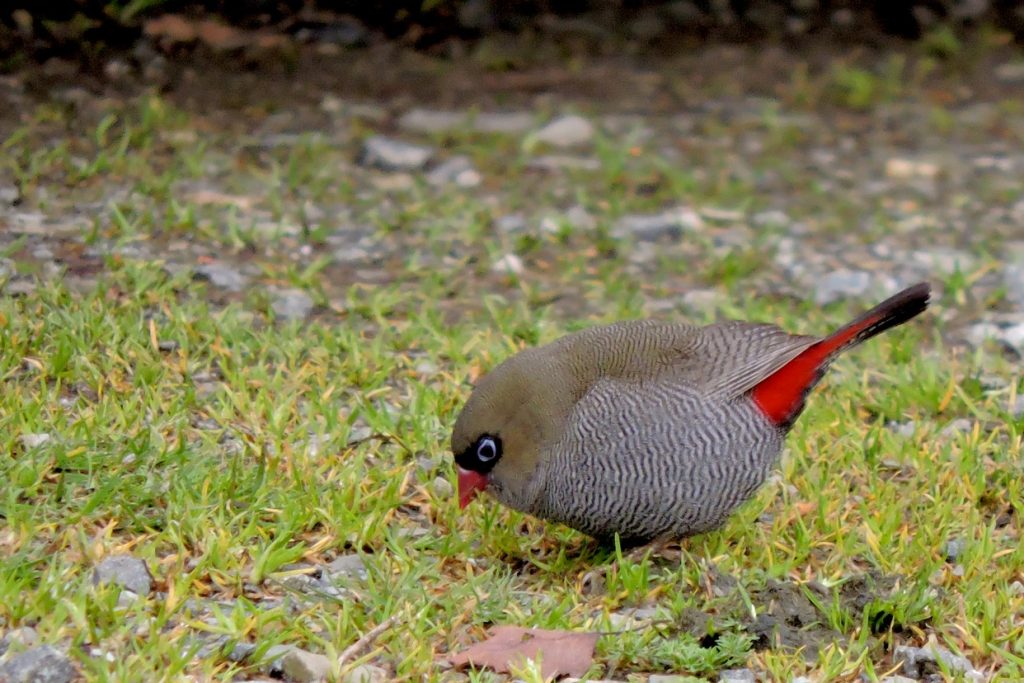
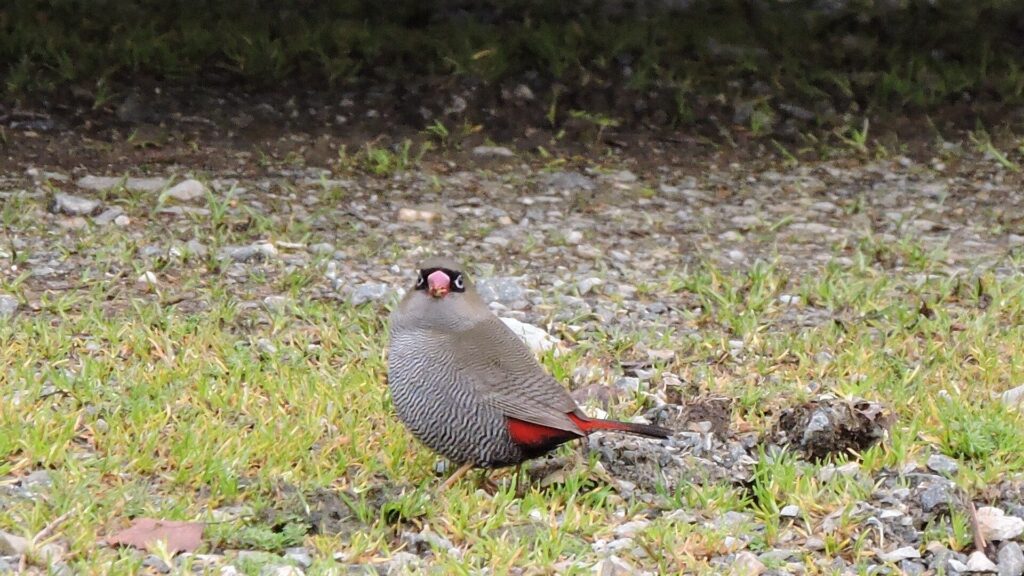
Beautiful firetails (Stagonopleura bella) are a lovely bird to encounter. Shy, quiet and often in small groups on the ground or in low shrubs – they have the most brilliant show of red as they move about. One of Bruny's natural gems.
The Beautiful Firetail is a small, tubby finch around 120 mm long. Ordinarily, firetails are seen on the ground, although the first firetails that I saw were hanging in grasses in the Adelaide Hills. There are 3 subspecies, with the subspecies Stagonopleura bella subsp. Bella occurring in Tasmania. A significant species being the only native finch species in the state. The firetail is an inconspicuous bird, not often obvious due to its lack of vocalization and shyness, but, to the observant nature lover, it offers a striking show of crimson red.
The Beautiful Firetail is a high rainfall finch, which Paton declares to be a [type of] specialist seed eater 1. This is due to seeds in high rainfall zones being available in greater quantities than in arid areas – where birds are more likely to be nomadic. Such dependable resources, along with an availability of water in the landscape, compliment a sedentary life cycle. The Beautiful Firetail needs water close by due to low water content in their main food – seeds. In comparison, fruits, insects and nectar as a food source offer a higher water content and, thus, less dependence on water in the landscape. Firetails and some other finches have thin, triangular beaks that enable them to extract seed from the fruit of Sheokes and Tea Trees (Allocasuarina sp, Leptospermum and Melaleuca sp.)1,5.
Notably, Paton lists Beautiful Firetails using Sheoke (Allocasuarina verticillata) as a food source, along with Glossy-black cockatoos, which depend on the Sheoke for survival. The firetails were noted to extract the seeds from the open valves of the Sheoke fruit1.
It is possible that the firetail is in decline on Bruny Island. We have seen less of the firetails in the last two years, and mostly singularly, instead of the groups previously seen. This is a personal observation and not quantified, may be due to timing, seasons or other factors. However the most significant change to the environment has been the disappearance of grasses from large areas due to overgrazing by the two wallaby species. Many pastures, fields and clearings that held good stands of grass for food and habitat have now turned to moss or grass that is less than 10 mm in height. The grass left is not allowed to grow to produce seed. Further, the species prefers long grass to build nests5. The lack of grass as cover, nesting material and a food resource could be a change for the species and could follow other firetail populations in trouble (Western beautiful firetail in South Australia)4.
To help provide habitat for the Beautiful firetail, planting of seed bearing shrubs and grasses where possible will help the species and many other populations by providing food resources, cover and nesting material. Of particular importance is the planting of Sheoke and tea trees.
References:
1.Paton D C, The Dynamic Partnership, 1986.
2.Morcombe, Michael, Field Guide To Australian Birds, 2003.
3. Atlas Of Living Australia, https://bie.ala.org.au/species/https://biodiversity.org.au/afd/taxa/b0bd393e-3ba7-41ef-8fcc-93bd1e24c150, retrieved November 28 2025.
4. https://www.landscape.sa.gov.au/hf/news/targeted-revegetation-brings-hope-for-threatened-finch-recovery retrieved November 2025.
5. https://cdn.environment.sa.gov.au/landscape/docs/hf/pa-fact-beautifulfiretail.pdf retrieved August 2025